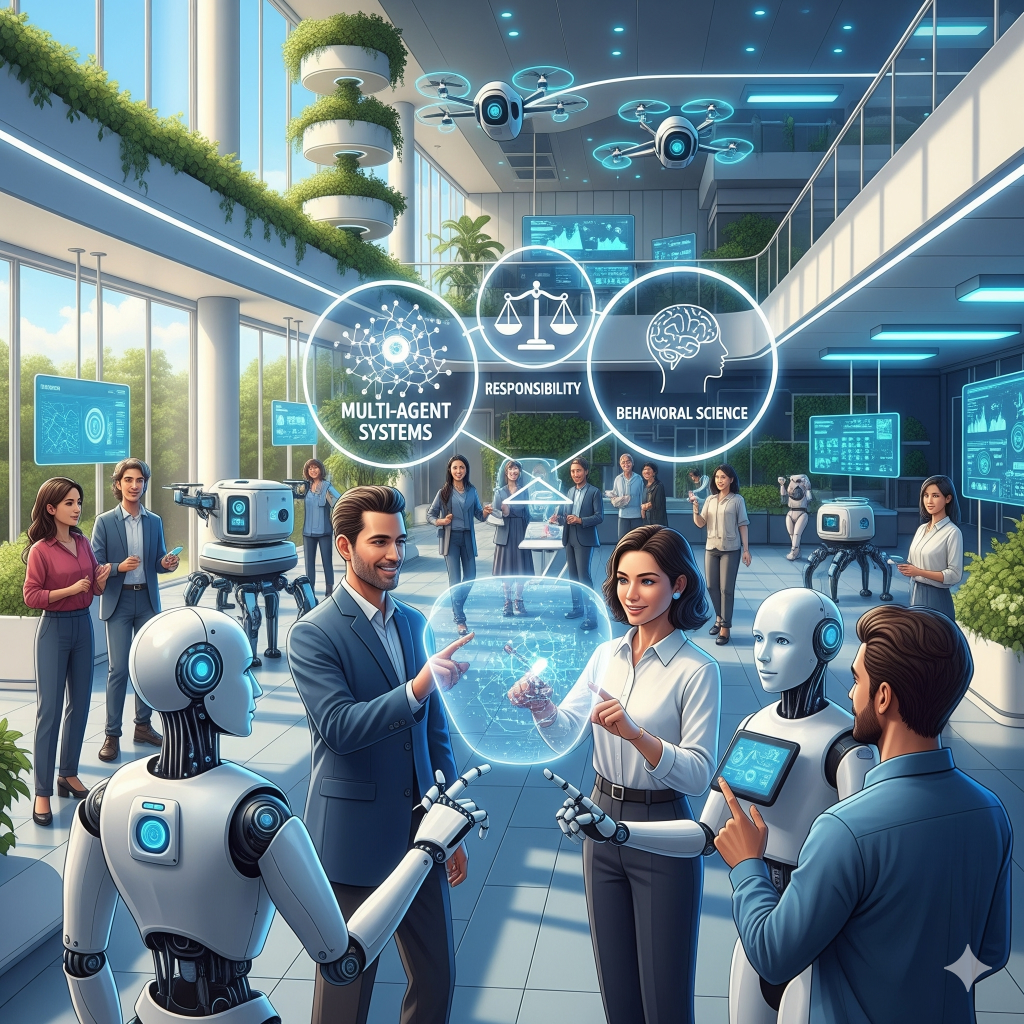
Artificial Intelligence is moving into a new phase where agents, or autonomous systems that can reason, act, and interact, are becoming more advanced. With this progress comes the need to understand not only how agents perform tasks but also how they behave, interact, and align with human values. Foundational research and behavioral science provide the base for making sure these agents are trustworthy, safe, and effective.
AI Agent Behavioral Science
This developing field explores how agents behave and interact in dynamic environments. Researchers are studying the principles that guide decision-making, collaboration, and adaptation in uncertain contexts.
Key focus areas include:
- Interaction dynamics: how agents cooperate or compete with each other and with humans.
- Fairness: ensuring agents do not reinforce biases or create unfair outcomes.
- Accountability: defining responsibility when agents make mistakes or take impactful actions.
- Interpretability: making agent decisions clear so humans can understand and trust them.
By combining insights from cognitive psychology, social science, and machine learning, agent behavioral science helps build human-centered AI systems.
Responsible AI Agents
As agents gain autonomy, responsibility becomes critical. The research community is actively developing alignment and value-safety frameworks that ensure AI agents act in ways consistent with human ethics and legal standards.
This involves:
- Legal and ethical guardrails: embedding rules to prevent harmful actions or misuse.
- Value alignment: ensuring agents reflect human values in decision-making.
- Safety protocols: designing mechanisms for override, fail-safes, and audit trails.
Just as self-driving cars need road safety laws, autonomous AI agents require governance and regulatory frameworks to protect against unintended consequences.
Embodied and Multi-Agent Systems
Beyond software, agents are increasingly taking on embodied forms such as robots, drones, and semi-physical systems that interact with the physical world. At the same time, multi-agent systems are emerging, where groups of agents collaborate or negotiate in real time.
Applications include:
- Collaborative robotics: teams of robots working in factories or disaster response.
- Smart environments: agents embedded in IoT networks managing energy, traffic, or logistics.
- Dynamic simulations: multi-agent setups modeling markets, climate systems, or social behaviors.
Studying embodiment and multi-agent collaboration provides insights into coordination, conflict resolution, and trust in high-stakes environments
The convergence of behavioral science, responsibility, and embodiment will shape the next decade of AI agents. From regulating their behavior to enabling collaboration across human and machine teams, foundational research ensures that agents are not only powerful but also ethical, interpretable, and aligned with society’s goals.
In short, the science of how agents think and act will be just as important as the algorithms that power them.
 AI Academy
Leave a comment