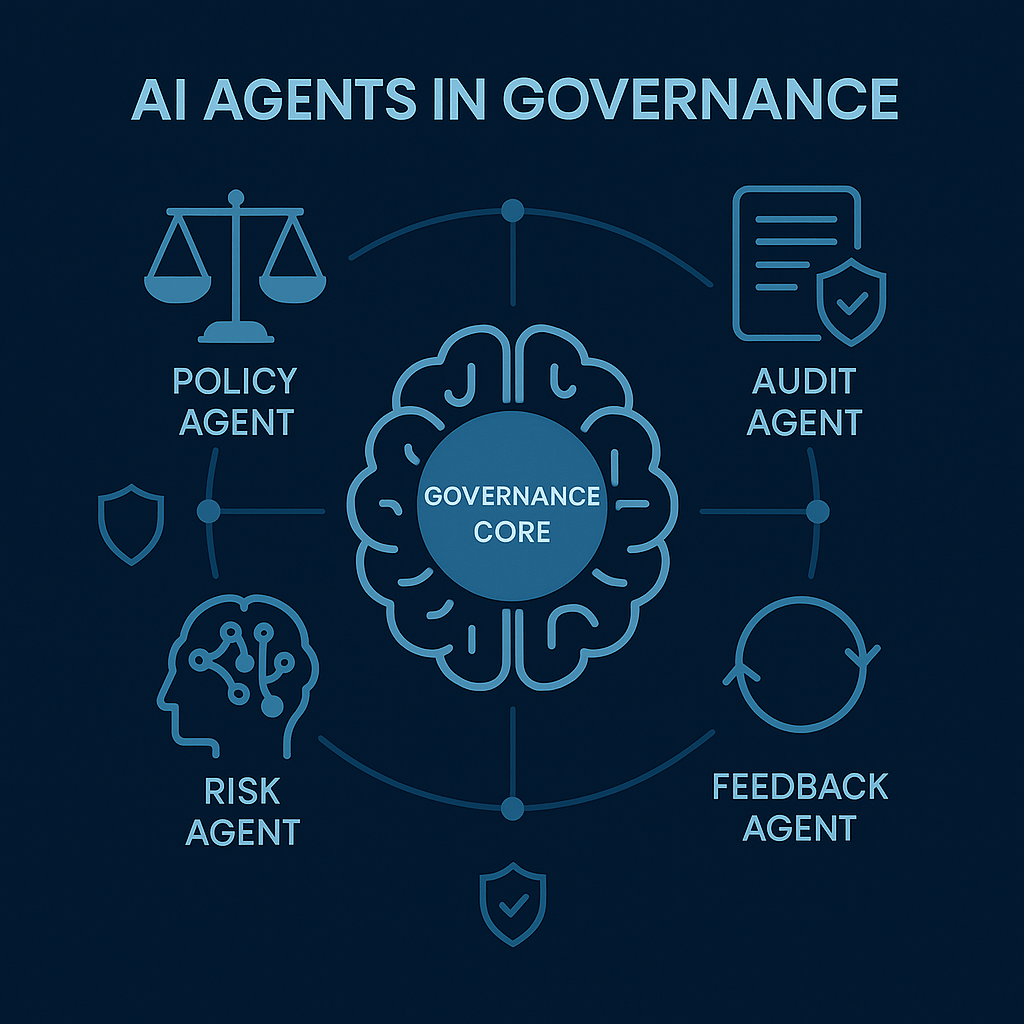
As organizations accelerate AI adoption, one question looms large: Can we trust what the machines decide?
Enter the new frontier of real-time governance—powered by Kafka and machine learning.
Kafka, the de facto standard for event streaming, has quietly become the nervous system of AI governance. When combined with machine learning, it enables continuous monitoring, intelligent intervention, and dynamic policy enforcement—at scale.
🧠 Why This Matters
Governance has traditionally been static: policies defined in documents, compliance enforced after the fact. But in the world of LLMs, autonomous agents, and evolving regulatory landscapes, this model fails.
What we need is “governance in motion”—systems that:
- Observe model behavior in real-time
- Detect drift, bias, or misuse as it happens
- Trigger automated safeguards or human escalation
- Maintain full audit trails for every prediction and decision
⚙️ How It Works
- Kafka Streams Everything:
All model inputs, outputs, and metadata (like latency, confidence, user prompts) flow through Kafka topics—providing an immutable, observable backbone. - ML Models Detect Anomalies:
Real-time ML models consume Kafka streams to flag bias, drift, or non-compliance using statistical thresholds or AI explainability scores. - Policy Agents Enforce Rules:
Governance agents (running on top of Kafka) evaluate events against dynamic policies—blocking, logging, or escalating actions in-flight. - Audit Agents Generate Reports:
Every transaction is traceable—Kafka ensures tamper-proof logs for regulatory reporting and ethical oversight.
🔍 Example Use Case
In a financial institution, a credit scoring model outputs decisions to a Kafka topic.
A governance ML agent monitors the topic to detect:
- Disparate impact across demographics
- Anomalous decisions post fine-tuning
- Unauthorized model usage after hours
When a policy violation is detected, the agent:
- Flags the incident
- Notifies the responsible team
- Logs everything for regulators
All in real-time.
🛡️ Why This Is the Future
With Kafka and ML, governance becomes:
- Continuous, not periodic
- Intelligent, not manual
- Proactive, not reactive
As AI agents become more autonomous, real-time, Kafka-powered governance isn’t optional—it’s foundational.
Let’s build AI systems that not only scale, but self-correct—with integrity baked in.
 AI Academy
Leave a comment