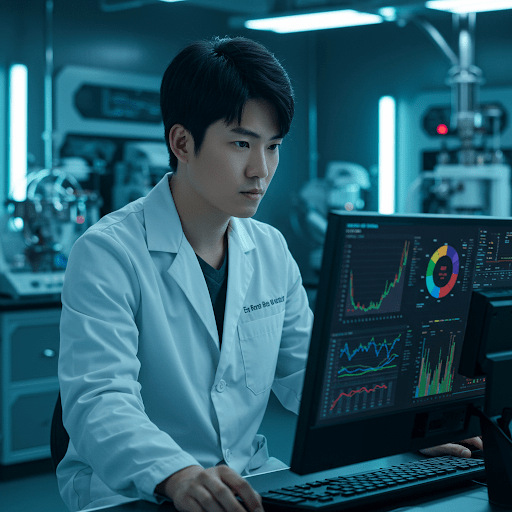
Artificial Intelligence (AI) is no longer a futuristic concept; it is rapidly transforming various industries, and the life sciences are at the forefront of this revolution. The application of AI in this domain is opening up unprecedented opportunities, accelerating discovery, improving healthcare outcomes, and reshaping the very fabric of how we understand and interact with biology and medicine.
Accelerating Drug Discovery and Development
The traditional drug discovery process is lengthy, expensive, and often fraught with high failure rates. AI offers a powerful toolkit to streamline and enhance each stage:
- Target Identification and Validation: AI algorithms can analyze vast datasets of genomic, proteomic, and other biological information to identify novel drug targets with greater speed and accuracy than traditional methods. Machine learning models can predict the likelihood of a target being relevant to a disease and its potential for therapeutic intervention.
- Lead Identification and Optimization: AI can screen millions of existing and novel chemical compounds to identify potential drug candidates. Generative AI models can even design new molecules with desired properties, such as specific binding affinities and low toxicity.This significantly accelerates the “hit-to-lead” process and optimizes lead compounds for efficacy and safety.
- Preclinical Testing: AI can be used to predict the pharmacokinetic and pharmacodynamic properties of drug candidates, as well as potential off-target effects, reducing the need for extensive animal testing and improving the selection of candidates for clinical trials.
- Clinical Trials: AI can optimize clinical trial design, identify suitable patient populations, predict patient responses to treatments, and even monitor trials in real-time to ensure patient safety and data integrity. AI-powered platforms can also aid in patient recruitment and retention, making trials more efficient and cost-effective.
- Drug Repurposing: AI algorithms can analyze existing drugs and their mechanisms of action to identify new therapeutic uses for different diseases, significantly shortening the development timeline for new treatments.
Diagnostics and Personalized Medicine
AI is empowering more accurate, efficient, and personalized approaches to disease diagnosis and treatment:
- Medical Imaging Analysis: AI algorithms, particularly deep learning models, excel at analyzing medical images such as X-rays, CT scans, and MRIs to detect anomalies and assist radiologists in making faster and more accurate diagnoses for various conditions, including cancer, neurological disorders, and cardiovascular diseases.
- Disease Prediction and Risk Assessment: By analyzing patient data, including medical history, genetic information, and lifestyle factors, AI models can identify individuals at high risk of developing specific diseases, enabling proactive interventions and preventative strategies.
- Personalized Treatment Strategies: AI can integrate diverse patient data to predict individual responses to different treatments, allowing clinicians to tailor therapies for maximum efficacy and minimal side effects.17 This is particularly relevant in fields like oncology, where AI can help select the most effective chemotherapy or targeted therapy based on a patient’s unique tumor profile.
- Digital Pathology: AI-powered tools can analyze digitized pathology slides with greater speed and consistency than manual review, aiding pathologists in cancer diagnosis, grading, and prognosis.
- Wearable Devices and Remote Monitoring: AI algorithms can analyze data from wearable sensors to continuously monitor vital signs and detect subtle changes that may indicate the onset or progression of a disease, enabling timely interventions and remote patient management.
Transforming Other Areas of Life Sciences
Beyond drug discovery and diagnostics, AI is making significant contributions to various other aspects of life sciences:
- Genomics and Bioinformatics: AI is crucial for analyzing the massive datasets generated by genomic sequencing, helping to identify disease-causing mutations, understand gene interactions, and predict protein structures.
- Agricultural Biotechnology: AI can optimize crop breeding, predict yields, detect plant diseases, and improve resource management in agriculture, contributing to food security and sustainability.
- Environmental Science: AI can analyze environmental data to monitor pollution, predict ecological changes, and aid in conservation efforts.
- Biomanufacturing: AI can optimize biopharmaceutical manufacturing processes, improve quality control, and enhance supply chain efficiency.
Challenges and the Future of AI in Life Sciences
Despite the immense potential, the integration of AI in life sciences also presents challenges:
- Data Quality and Accessibility: The effectiveness of AI models heavily relies on the availability of high-quality, well-annotated, and diverse datasets. Data privacy and security are also critical concerns.
- Regulatory Hurdles: Clear regulatory frameworks are needed to govern the development and deployment of AI-powered medical devices and diagnostic tools.
- Interpretability and Explainability: Some AI models, particularly deep learning algorithms, can be “black boxes,” making it difficult to understand the reasoning behind their predictions.Explainable AI (XAI) is an active area of research to address this.
- Ethical Considerations: Issues related to bias in algorithms, data ownership, and the potential for misuse need careful consideration.
- Interdisciplinary Collaboration: Effective implementation of AI in life sciences requires close collaboration between biologists, clinicians, data scientists, and AI experts.
Looking ahead, the application of AI in life sciences is poised for exponential growth. We can expect to see even more sophisticated AI-powered tools that:
- Accelerate the development of personalized therapies tailored to an individual’s unique biological makeup.
- Enable earlier and more accurate disease detection, potentially before symptoms even manifest.
- Revolutionize our understanding of complex biological systems and disease mechanisms.
- Drive the discovery of novel biomaterials and sustainable solutions.
- Transform healthcare delivery, making it more efficient, accessible, and patient-centric.
In conclusion, AI is a transformative force in the life sciences, offering unprecedented opportunities to advance our understanding of life, develop innovative therapeutics, and improve human health. While challenges remain, the continued progress in AI and its integration with biological and medical knowledge promises a future where diseases are diagnosed earlier, treatments are more effective, and the process of scientific discovery is significantly accelerated. The AI revolution in life sciences is not just about technological advancement; it is about creating a healthier and more sustainable future for all.
 AI Academy
Leave a comment