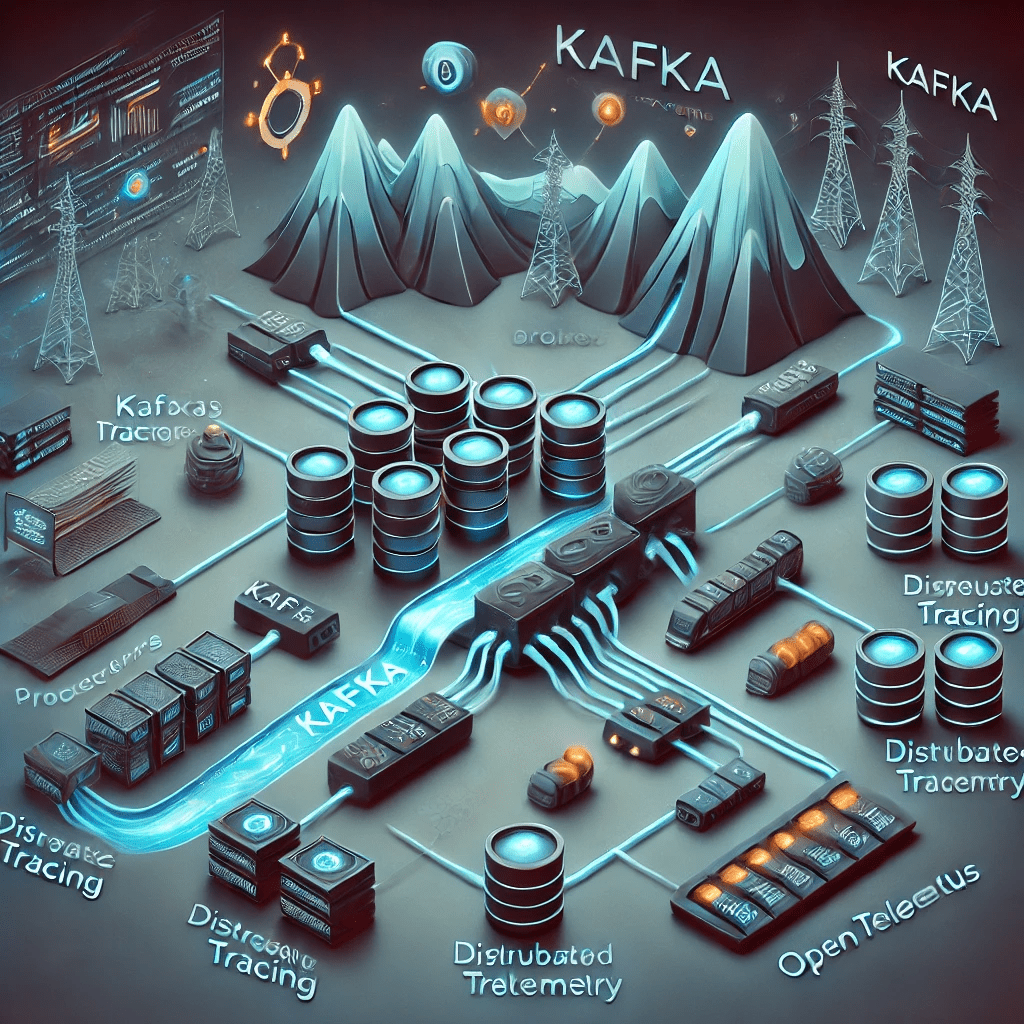
As organizations increasingly rely on real-time data streaming for mission-critical applications, observability and traceability within Apache Kafka ecosystems have become essential. Kafka, widely used for high-throughput messaging and distributed event processing, enables seamless data movement across services. However, ensuring transparency into Kafka’s data flow can be challenging, especially in complex, multi-cluster architectures.
This article explores how to trace data flow within Kafka ecosystems, covering key tools, methodologies, and best practices for monitoring, debugging, and optimizing Kafka pipelines.
Why Tracing Kafka Data Flow Matters
1. Debugging Data Issues
Kafka enables loosely coupled, asynchronous communication between producers and consumers. However, data issues such as message loss, duplication, out-of-order events, or corruption can arise due to:
- Faulty producers or consumers
- Improper partitioning strategies
- Broker failures
- Network delays
2. Performance Optimization
Observing Kafka data flow helps identify:
- Slow consumers causing lag
- Inefficient partitioning leading to uneven workloads
- High broker loads affecting throughput
3. Compliance and Auditing
Many industries require end-to-end traceability of data movement for compliance with regulations such as GDPR, HIPAA, or PCI-DSS. Kafka observability ensures:
- Data lineage tracking (who produced, modified, and consumed the data)
- Audit trails for message processing
- Anomaly detection in sensitive data movement
How Kafka Handles Data Flow
Kafka’s data flow involves four main components:
- Producers publish messages to Kafka topics.
- Brokers store and replicate messages across partitions.
- Consumers read and process data from topics.
- Connectors & Stream Processing Frameworks integrate Kafka with external systems.
Key Tracing Challenges
🔹 Stateless nature of Kafka messages (no built-in request-response tracking)
🔹 Multiple consumers processing the same data asynchronously
🔹 Message transformation and enrichment via stream processing
🔹 Cross-cluster data movement in multi-region architectures
To trace data flow effectively, we need specialized tools and techniques.
Methods for Tracing Data Flow in Kafka
1. Logging and Message Metadata
- Use message headers to include trace IDs, timestamps, and metadata.
- Implement structured logging in producers and consumers.
- Enrich logs with partition, offset, and topic information.
2. Using Distributed Tracing with OpenTelemetry
Kafka doesn’t natively support distributed tracing, but OpenTelemetry (OTel) can instrument Kafka clients to track message flow.
Key Steps for OpenTelemetry in Kafka:
- Attach a trace ID to messages.
- Capture spans for produce, process, and consume operations.
- Use tracing tools like Jaeger or Zipkin to visualize the flow.
🛠️ Best Practices:
- Use Jaeger or Zipkin to visualize traces.
- Ensure all microservices participate in the tracing context.
- Implement trace propagation across HTTP, gRPC, and Kafka.
3. Monitoring Kafka Lag with Kafka Exporter and Prometheus
Lag occurs when consumers process messages slower than producers generate them. Kafka Exporter collects broker, topic, and partition metrics, which can be monitored using Prometheus and Grafana.
This helps identify slow consumers and balance partition workloads.
4. Tracing Data Lineage with Kafka Schema Registry
For structured data flow tracking, Schema Registry ensures:
- Versioned schemas for producers and consumers.
- Validation of message format before processing.
- Tracing schema evolution to prevent breaking changes.
✅ Schema Registry Benefits:
- Ensures data consistency across microservices.
- Supports schema evolution without breaking consumers.
- Enhances data traceability in enterprise Kafka workflows.
5. Tracing Data Across Multi-Cluster Kafka Environments
For organizations running multi-region Kafka clusters, MirrorMaker 2.0 (MM2) enables cross-cluster data replication. However, tracking data flow across clusters requires:
- Global trace IDs across clusters
- Cross-cluster monitoring dashboards
- Data integrity validation between source and replica clusters
As Kafka adoption grows, real-time traceability will be a key differentiator for high-performance, scalable, and reliable data architectures.
 AI Academy
Leave a comment