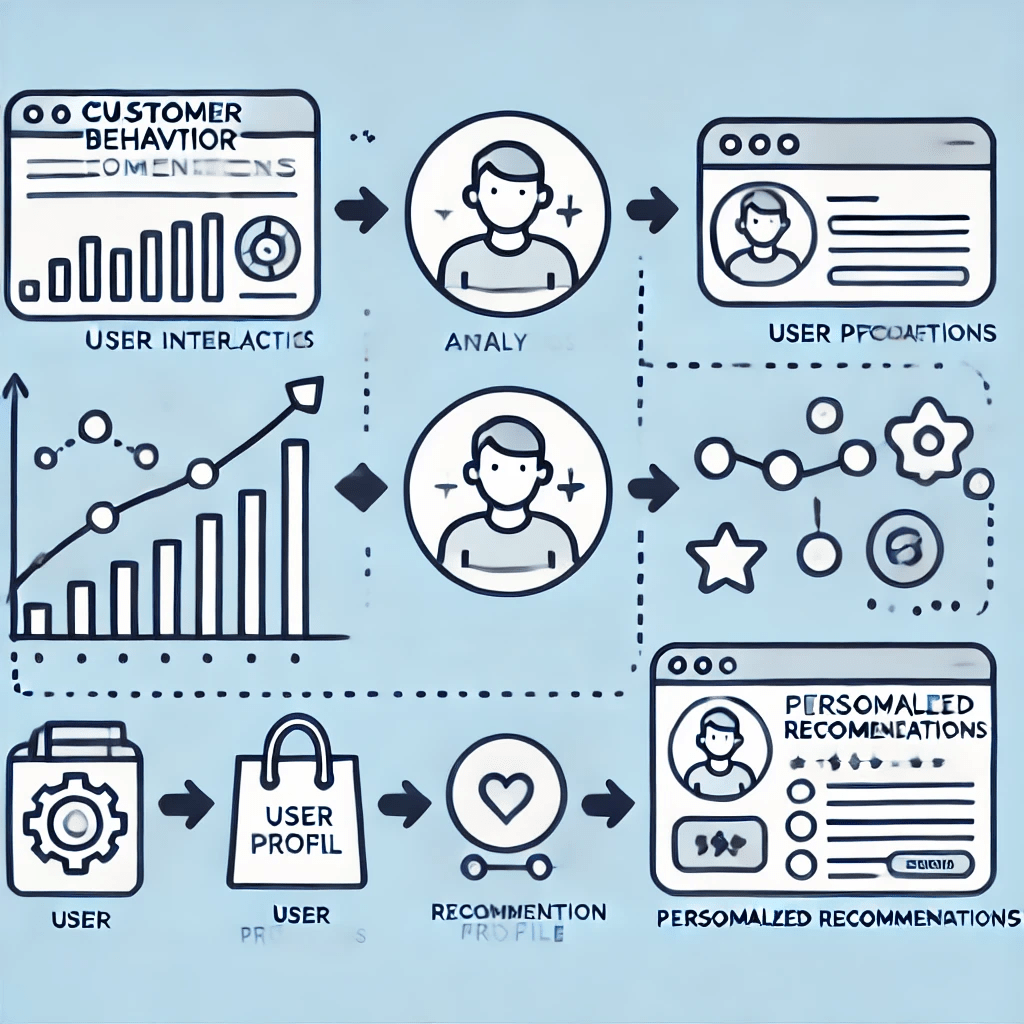
Customer Behavior Analysis for Personalized Recommendations
In this digital age, consumers are bombarded with countless options. To stand out, businesses must deliver personalized experiences that resonate with individual preferences. This is where customer behavior analysis comes into play. By understanding how customers interact with a brand, businesses can tailor recommendations to increase engagement, conversions, and customer satisfaction.
Understanding Customer Behavior
Before diving into personalized recommendations, it’s crucial to understand the nuances of customer behavior. This involves gathering and analyzing data on:
- Demographics: Age, gender, location, income, etc.
- Psychographics: Interests, values, lifestyle, personality traits.
- Purchase history: Past purchases, products viewed, cart abandonment.
- Website behavior: Pages visited, time spent, click-through rates.
- Social media interactions: Likes, shares, comments, and engagement.
Building a Robust Data Infrastructure
To effectively analyze customer behavior, a robust data infrastructure is essential. This involves:
- Data collection: Gathering data from various sources, including website analytics, CRM systems, and social media platforms.
- Data cleaning and preprocessing: Ensuring data accuracy, consistency, and completeness.
- Data storage: Storing data in a scalable and accessible manner (e.g., data warehouses, data lakes).
Using Data for Insights
Once data is collected and processed, it’s time to extract valuable insights:
- Customer segmentation: Grouping customers based on shared characteristics to identify distinct segments.
- Customer journey mapping: Visualizing the customer’s path to purchase to understand touchpoints and pain points.
- Predictive analytics: Using historical data to forecast future customer behavior.
Designing Personalized Recommendations
Based on the insights gained, businesses can design personalized recommendations:
- Content-based recommendations: Recommending items like those the customer has before interacted with.
- Collaborative filtering: Suggesting items based on preferences of similar customers.
- Hybrid approach: Combining content-based and collaborative filtering for enhanced accuracy.
- Real-time recommendations: Delivering recommendations based on current user behavior and context.
Key Considerations for Effective Recommendations
- Relevance: Make sure recommendations align with the customer’s interests and needs.
- Diversity: Offer a variety of options to avoid monotony.
- Serendipity: Introduce unexpected but relevant recommendations to spark interest.
- Privacy: Respect customer privacy and handle data responsibly.
- Testing and improvement: Continuously evaluate and refine recommendation algorithms.
Tools and Technologies
Many tools and technologies can aid in customer behavior analysis and personalized recommendations, including:
- Data Analytics Platforms:
- Google Analytics: This tool helps track and report website traffic, providing insights into customer behavior and preferences.
- Adobe Analytics: Offers advanced segmentation and real-time analytics to understand customer interactions across different channels.
- Machine Learning Frameworks:
- TensorFlow: An open-source platform for machine learning developed by Google. It provides a comprehensive ecosystem of tools, libraries, and community resources to build and deploy ML models.
- PyTorch: Developed by Facebook, PyTorch is an open-source machine learning framework that accelerates the process from research prototyping to production deployment.
- Recommendation Engines:
- Google Recommendations AI: A machine learning-powered recommendation system that helps retail businesses deliver personalized recommendations to users.
- Azure Personalizer: Uses reinforcement learning to give tailored experiences to customers by understanding user behavior and preferences.
- Customer Data Platforms (CDPs):
- Google Cloud BigQuery: Enables the analysis of vast amounts of data in real-time, providing a holistic view of customer interactions.
- Segment: Collects, unifies, and routes customer data to various tools, ensuring a comprehensive view of customer behavior across different platforms.
By effectively using customer behavior analysis and personalized recommendations, businesses can create exceptional customer experiences, increase sales, and build long-term loyalty.
 AI Academy
Leave a comment