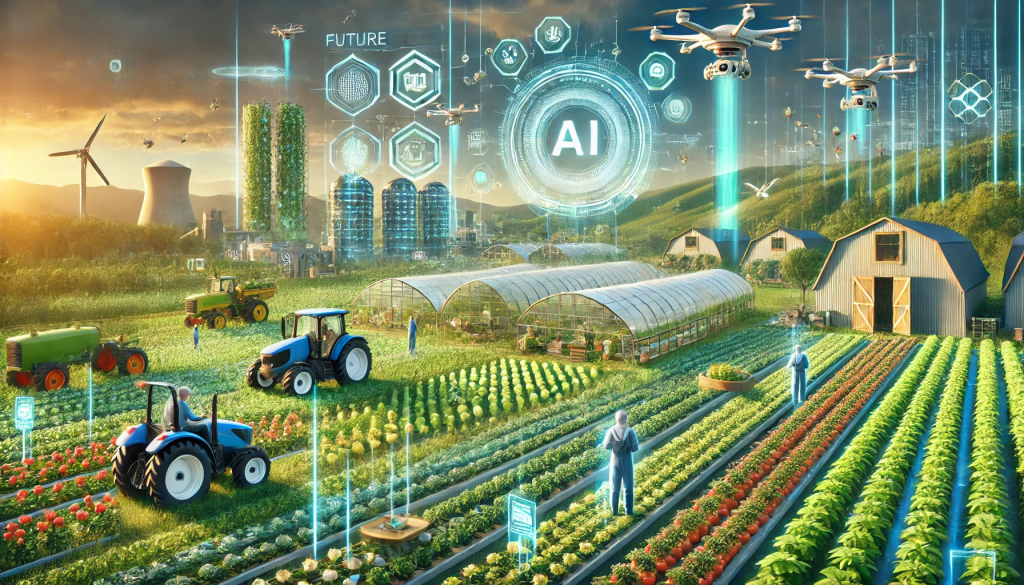
Our plates are about to get a high-tech makeover. Artificial intelligence (AI) is transforming the agricultural landscape, promising a future of increased food production, reduced environmental impact, and a more resilient food system. Let’s see into how AI can reshape the way we grow our food.
One of the most significant contributions of AI is the ability to usher in an era of precision agriculture. Here’s how:
- Data-Driven Decisions: AI analyzes vast amounts of data from sensors, satellites, and weather stations. This data paints a detailed picture of soil conditions, crop health, and potential threats. Farmers can then leverage this information to make informed decisions about irrigation, fertilization, and pest control, optimizing resource use and maximizing yields.
- Personalized Plant Care: AI doesn’t stop at the field level. It can even analyze individual plants, identifying early signs of disease or nutrient deficiencies. This allows for targeted interventions, minimizing waste and ensuring optimal growth for each plant.
- Predictive Power: AI models can predict weather patterns, allowing farmers to prepare for droughts, floods, or heat waves. This proactive approach minimizes crop losses and ensures a more stable food supply.
Sustainability on the Menu
AI isn’t just about bigger yields; it’s about smarter practices. Here’s how AI promotes sustainability:
- Reduced Water Usage: Precise irrigation based on real-time needs ensures that crops receive only the water they require, minimizing water waste, a crucial concern in a world facing water scarcity.
- Optimized Fertilizer Use: AI-powered analysis helps determine the exact amount and type of fertilizer needed for each area, reducing fertilizer runoff and promoting healthier soil ecosystems.
- Combating Climate Change: AI can help farmers adapt to changing weather patterns and reduce greenhouse gas emissions by optimizing agricultural practices.
Challenges and Considerations
While the future of AI-powered agriculture is promising, there are challenges to address:
- Accessibility and Affordability: Small-scale farmers may struggle to access or afford AI technologies. Efforts are needed to bridge the digital divide and make AI solutions accessible to all.
- Data Privacy and Security: As agriculture becomes more data-driven, concerns around data privacy and security need to be addressed.
- Ethical Considerations: The reliance on AI raises questions about the future of human labor in agriculture. A focus on reskilling and retraining programs is necessary.
By embracing AI, agriculture can become more productive, sustainable, and resilient. This, in turn, ensures a more secure food supply for a growing global population.
 AI Academy
Leave a comment