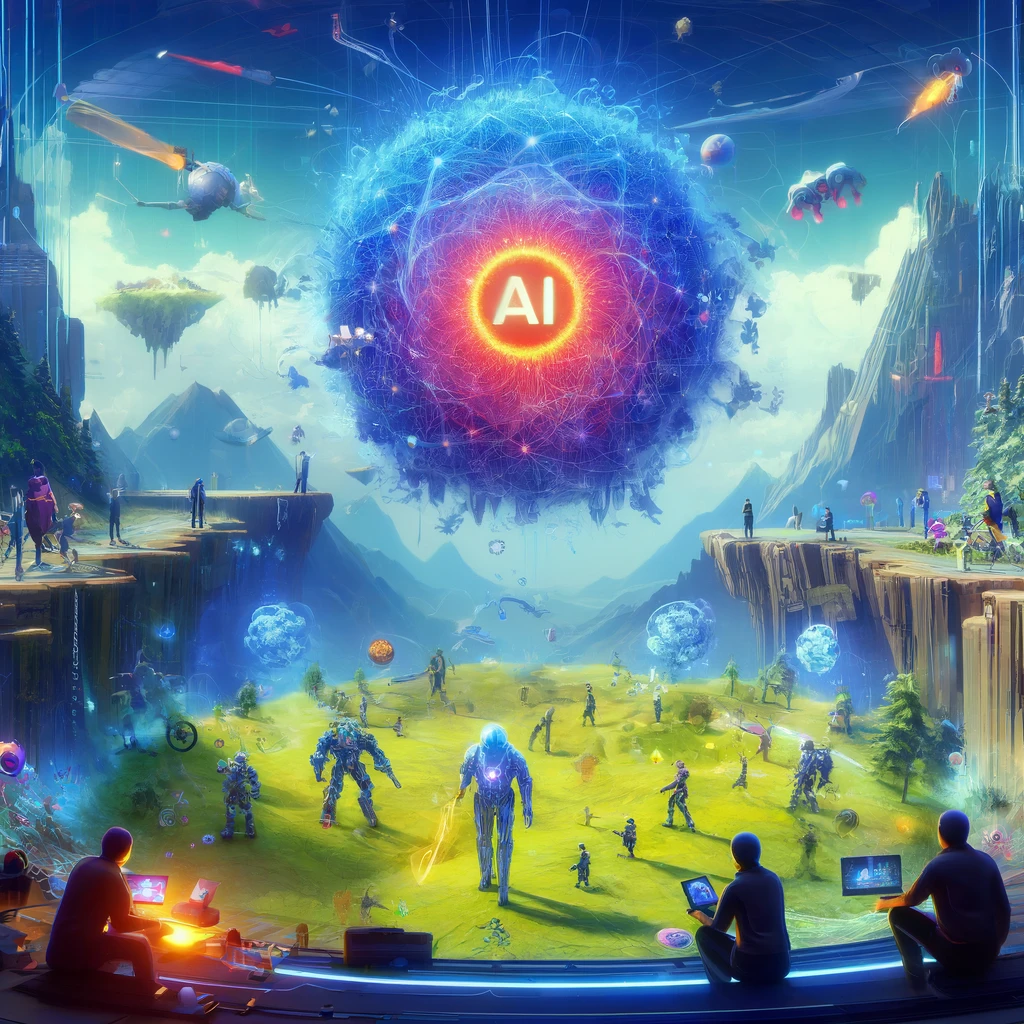
The gaming industry, known for its rapid innovation and technological advancement, is now using generative artificial intelligence (AI) to create new, immersive experiences for players. Generative AI is transforming how games are designed, developed, and played, offering unprecedented opportunities for creativity and efficiency. This article explores the various ways generative AI is making its mark on the gaming world.
Enhancing Creative Processes
Generative AI can automate and enhance many aspects of game development, from creating realistic environments and characters to generating complex storylines.
- Character and Asset Creation: AI algorithms can generate detailed character models and game assets based on a set of parameters or styles defined by developers. This not only speeds up the development process but also helps in maintaining a consistent aesthetic throughout the game.
- Procedural Content Generation: Games like “No Man’s Sky” and “Minecraft” have used procedural generation to create vast, explorable worlds. Generative AI can take this a step further by not only creating landscapes but also populating them with interactive elements, ecosystems, and narratives that respond to player actions.
Personalizing Player Experiences
Generative AI can tailor gaming experiences to individual players, making games more engaging and enjoyable.
- Dynamic Storytelling: AI can generate story elements in real-time, allowing the narrative to evolve based on player decisions. This creates a personalized gaming experience that can be different on every playthrough, adding to the game’s replay value.
- Adaptive Difficulty: By analyzing a player’s performance, generative AI can adjust the game’s difficulty in real-time. This ensures that the game remains challenging but not frustrating, catering to a wide range of skill levels.
Streamlining Game Testing
Testing is a critical phase in game development, often consuming significant time and resources. Generative AI can automate testing processes, quickly identifying bugs or imbalances by simulating thousands of gameplays within minutes.
- Automated Playtesting: AI agents can play the game continuously, testing various strategies and providing feedback on game mechanics. This helps developers fine-tune gameplay, ensure balance, and refine user interfaces.
- Quality Assurance: AI can generate test cases that cover unusual combinations or edge cases that human testers might miss. This is especially useful in complex games with multiple interacting systems.
Looking forward, the integration of AI in gaming is set to deepen, with technologies such as AI-driven NPCs (non-player characters) that offer more realistic and responsive interactions. Furthermore, AI could revolutionize multiplayer experiences by managing game servers to optimize network conditions or by stepping in as a player to ensure that matches are always available.
 AI Academy
Leave a comment