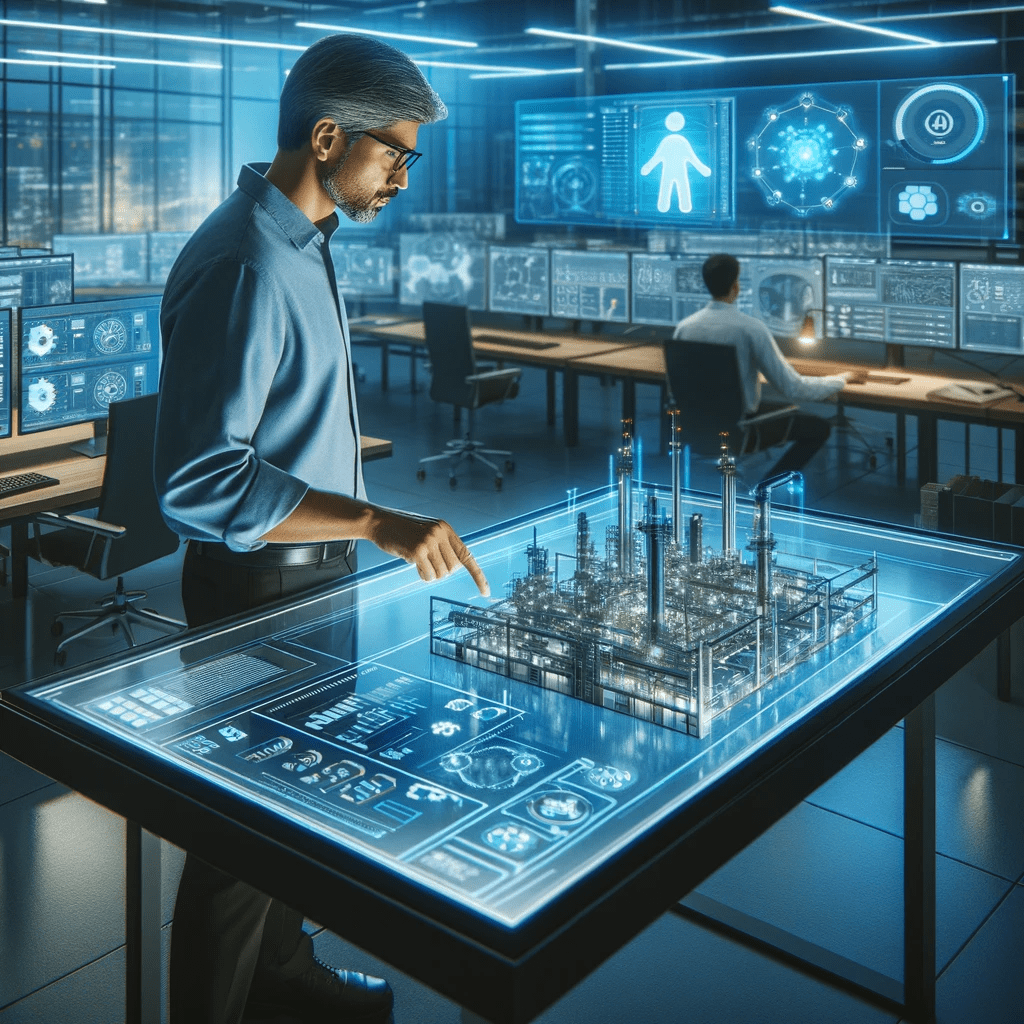
The physical world is increasingly being mirrored by a digital one. At the heart of this digital reflection lies the concept of digital twins – virtual representations of physical entities that capture their characteristics and behaviors in real-time. But these digital twins aren’t merely passive replicas. When coupled with machine learning (ML), they become powerful tools for optimizing operations, predicting failures, etc. The synergy between digital twins and machine learning can be very powerful across numerous industries. In this article we will look into how these two technologies are converging, their practical applications, and the potential impacts on future innovations.
What are Digital Twins?
A digital twin is a virtual model designed to accurately reflect a physical object, process, or system. The concept originated in the early 2000s, primarily in manufacturing and large-scale industrial applications, to improve the monitoring, maintenance, and planning of systems. Essentially, digital twins serve as a bridge between the physical and digital worlds, providing a real-time, comprehensive view of their physical counterparts through sensors and data analytics.
It is essentially a software program that ingests data from sensors attached to its physical counterpart. This data can include everything from temperature readings to vibration patterns, depending on the specific application. By analyzing this data, the digital twin can create a dynamic model that reflects the real-world system’s state.
This real-time reflection offers significant advantages. Imagine a digital twin of a jet engine. By continuously analyzing sensor data, the twin can predict when a part might fail, allowing for preventive maintenance and avoiding costly in-flight breakdowns. Similarly, a digital twin of a factory floor can optimize production processes by identifying bottlenecks and inefficiencies.
The Role of Machine Learning
Machine learning (ML), a subset of artificial intelligence, involves algorithms that enable computers to learn from and interpret data without explicit programming. ML algorithms can analyze the vast amount of data collected by the digital twin, recognizing patterns and trends that would be difficult for humans to identify. When applied to digital twins, ML can predict outcomes based on data trends, enhance decision-making processes, and automate responses to changes in the twin’s environment.
Integration of Digital Twins with Machine Learning
The integration of digital twins with machine learning technologies is very unique. Here’s how they work together:
- Data Optimization: Digital twins generate massive amounts of data from various sensors and input sources. Machine learning algorithms analyze this data to find patterns, optimize operations, and predict future conditions. This predictive capability is crucial for preemptive maintenance strategies in manufacturing, reducing downtime and extending equipment life.
- Enhanced Simulation: With ML, digital twins can simulate scenarios more accurately. For example, in the automotive industry, digital twins of vehicles process data from simulations and real-world driving to predict mechanical failures or optimize fuel efficiency based on driving habits and conditions.
- Adaptive and Autonomous Systems: In sectors like smart cities and healthcare, digital twins equipped with ML algorithms can autonomously adjust to changing conditions. For instance, a digital twin of a city could manage traffic flow autonomously by analyzing real-time data, weather conditions, and event schedules to optimize signal timings and reduce congestion.
- Personalization and User Experience: In consumer-focused industries, such as retail and entertainment, digital twins with ML capabilities can offer personalized experiences to users by learning from their interactions and preferences, thereby enhancing customer satisfaction and loyalty.
While the benefits are vast, there are significant challenges in fully integrating digital twins with machine learning:
- Data Privacy and Security: The extensive data required to operate digital twins raises concerns about data privacy and security. Ensuring the integrity and security of data, especially in sensitive industries like healthcare, is crucial.
- Complexity in Implementation: Developing and maintaining digital twins with integrated ML features involves significant technical complexity and resource investment, which can be a barrier for smaller organizations.
- Need for Continuous Updates: Both digital twins and machine learning models require ongoing updates to adapt to new data and changing conditions, necessitating a continuous investment in technology and skills.
Future Outlook
The synergy between digital twins and machine learning is still evolving, but the potential applications are vast. We can expect to see these technologies playing a major role in areas like:
- Smart Cities: Digital twins of entire cities can be used to optimize traffic flow, energy use, and resource management.
- Personalized Medicine: Digital twins of patients can be used to tailor medical treatments and predict potential health issues.
- Autonomous Vehicles: Digital twins can be used to simulate driving scenarios and train self-driving cars in a safe virtual environment.
As industries increasingly adopt advanced technologies, the future of digital twins and machine learning looks promising. Their integration is expected to drive innovation, particularly in automation, predictive maintenance, and smart systems, offering new opportunities for efficiency and customization.
The convergence of digital twins and machine learning not only enhances operational capabilities but also paves the way for advancements in digital and physical integration, potentially leading to smarter, more responsive technology solutions.
 AI Academy
Leave a comment