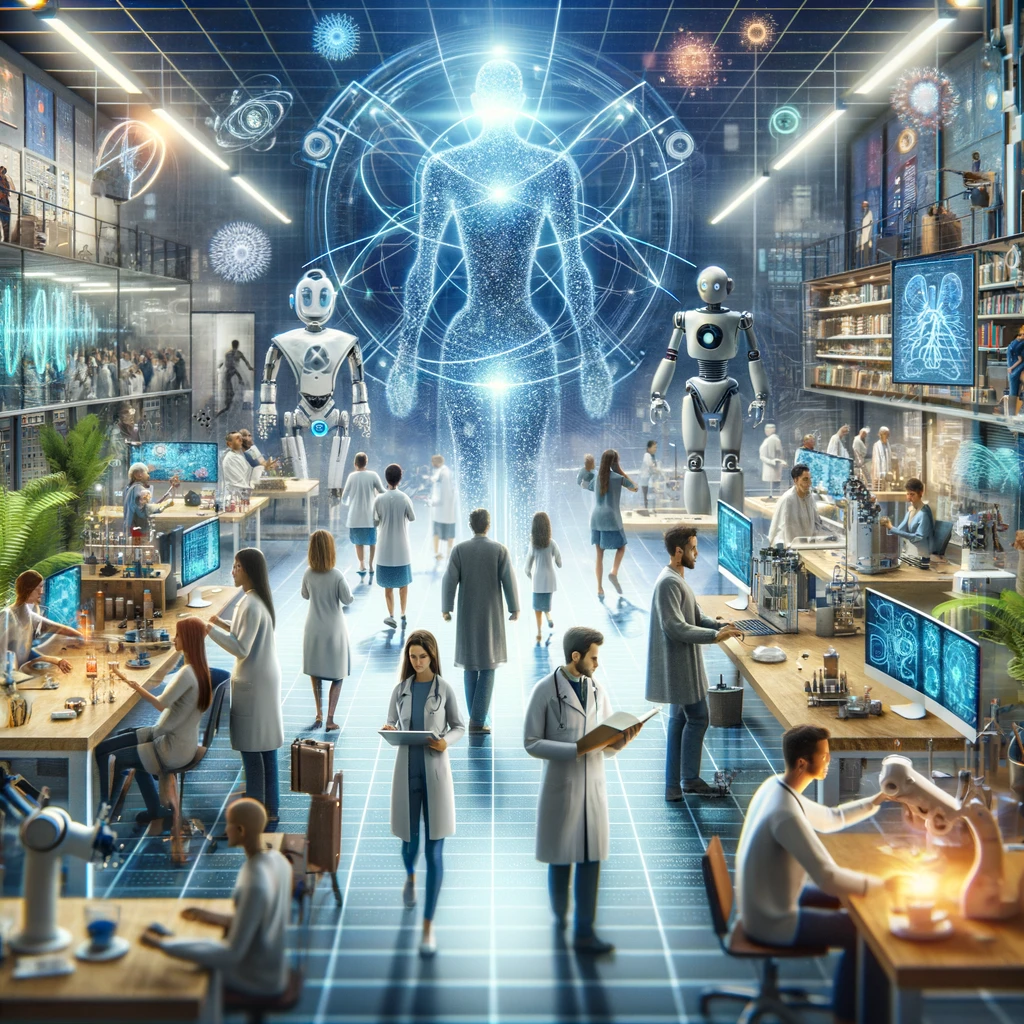
The rise of Generative AI (Gen AI) marks a significant leap in artificial intelligence. These powerful models can not only analyze data but also create entirely new content, from realistic images and music to compelling writing and code. The question is how can we leverage Gen AI to empower humans, not replace them?
Augmenting Human Capabilities and Creativity:
Gen AI, with its ability to learn from vast datasets and generate content, insights, and solutions, presents a unique opportunity to extend human creativity and problem-solving. In fields ranging from medicine to engineering, and from art to literature, AI’s potential to complement human skills is being explored with enthusiasm. For instance, in healthcare, AI can analyze medical data far more quickly and accurately than humans, assisting doctors in diagnosing diseases and crafting personalized treatment plans. Similarly, in creative industries, AI can generate music, art, and literature, offering artists and creators new tools to experiment with and expand their creative boundaries.
The collaborative potential of humans and AI can be seen as a symbiotic relationship where each brings its unique strengths to the table. While AI excels in processing and analyzing data, humans bring contextual understanding, emotional intelligence, and ethical judgment. Together, they can solve complex problems more efficiently, innovate at a faster pace, and create works of art and technology that were previously unimaginable.
Gen AI acts as a powerful extension of human abilities. Here are some ways it can be used:
- Enhanced Problem Solving: AI can analyze vast amounts of data to identify patterns and relationships that might escape human attention. This can lead to innovative solutions in various fields, from scientific discovery to product development.
- Supercharged Creativity: Gen AI can generate a multitude of creative options, from brainstorming new product ideas to composing musical variations. This allows humans to focus on refining and selecting the best ideas, fostering a more efficient creative process.
- Personalized Learning and Education: Gen AI can tailor learning experiences to individual needs. AI tutors can provide personalized feedback and suggest learning paths, while AI-powered simulations can create immersive and interactive learning environments.
Ethical Considerations for Human-AI Collaboration:
As with any powerful technology, ethical considerations are paramount:
- Bias in AI Models: Training data can contain biases that are reflected in AI outputs. We need to ensure fairness and inclusivity by carefully selecting training data and mitigating bias during model development.
- Transparency and Explainability: It’s crucial to understand how AI arrives at its conclusions. Explainable AI techniques can help humans understand the reasoning behind AI outputs, fostering trust and collaboration.
- Job Displacement: Automation powered by AI may lead to job displacement in certain sectors. We need to focus on reskilling and upskilling initiatives to prepare the workforce for a changing job market.
Ensuring Human Control:
Human judgment and decision-making remain essential:
- Maintaining Oversight: Humans should always have the final say when it comes to critical decisions. AI should be seen as a tool to inform, not dictate, human choices.
- Focus on Human Strengths: Humans excel at creativity, empathy, and critical thinking. AI can take over repetitive tasks, allowing humans to focus on these core strengths.
- Building Trust and Collaboration: Fostering a culture of trust and collaboration between humans and AI is crucial for maximizing the potential of this partnership.
The future of work and creativity lies in a powerful collaboration between humans and Gen AI. By using the strengths of both, we can indentify new possibilities, solve complex problems, and build a more innovative and prosperous future. However, navigating this path requires careful consideration of ethical implications and ensuring human control remains at the forefront. As we move forward, prioritizing human-centered AI development will be key to maximizing the benefits of this transformative technology.
 AI Academy
Leave a comment