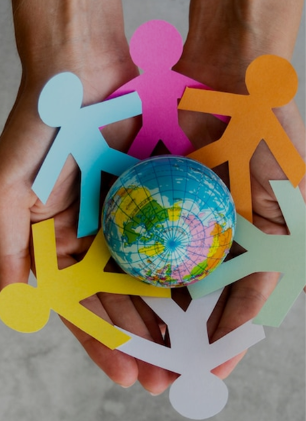
Large Language Models (LLMs) have emerged as transformative tools for driving social good and supporting humanitarian efforts. With their unparalleled capacity for natural language understanding and generation, LLMs offer innovative solutions to some of the most pressing social challenges. This article delves into the various ways LLMs are being leveraged for the betterment of society and humanitarian causes.
Communication and Education
One of the fundamental applications of LLMs in the realm of social good is in enhancing communication and education. These models have the ability to break language barriers, offering real-time translation and interpretation services that can bridge gaps between diverse communities. In education, LLMs are being used to create personalized learning experiences, making educational content more accessible and tailored to individual learning styles, especially in underprivileged or remote areas.
Here’s how this process typically unfolds:
- Identifying Communication and Educational Needs:
- Needs Assessment: Determine the specific communication and educational needs of various communities, especially focusing on those with language barriers or limited access to education.
- Target Audience Analysis: Understand the demographics, language preferences, learning styles, and educational requirements of the target audience.
- Data Collection and Aggregation:
- Language Data Gathering: Collect extensive language data, including texts in multiple languages, dialects, and colloquial expressions for accurate translation and interpretation.
- Educational Content Compilation: Gather a wide range of educational materials across various subjects, levels, and learning styles.
- Data Preprocessing for LLMs:
- Data Cleaning and Organization: Clean and organize the collected language and educational data, ensuring it’s accurate and relevant.
- Formatting for LLMs: Transform the data into a format suitable for processing by LLMs, such as converting educational materials into interactive, language-friendly formats.
- Training the LLM:
- Model Training: Train the LLM using the gathered language and educational data, ensuring it can effectively understand and process multiple languages and educational content.
- Fine-tuning for Specific Applications: Fine-tune the LLM for specific tasks such as real-time translation, language interpretation, or generating personalized educational content.
- Developing Translation and Interpretation Tools:
- Translation Tool Development: Develop tools that use the LLM for real-time translation and interpretation, facilitating communication across different languages.
- Quality Assurance: Test and refine these tools to ensure accuracy and effectiveness in various linguistic and cultural contexts.
- Creating Personalized Educational Experiences:
- Adaptive Learning Platforms: Utilize LLMs to develop adaptive learning platforms that can personalize educational content based on individual learning styles and needs.
- Interactive Content Generation: Use the LLM to generate interactive and engaging educational content, catering to diverse learning preferences and abilities.
- Implementation and User Feedback:
- Deploying in Target Communities: Implement the developed tools and platforms in target communities, focusing on areas with significant language barriers or educational challenges.
- Gathering User Feedback: Collect feedback from users to understand the effectiveness of the tools and identify areas for improvement.
- Continuous Improvement and Scaling:
- Iterative Refinement: Continuously refine the translation tools and educational platforms based on user feedback and changing needs.
- Scaling Up: Gradually scale up the implementation to reach a wider audience, adapting the tools and content to suit different languages and educational contexts.
- Monitoring and Impact Assessment:
- Performance Monitoring: Regularly monitor the performance of the translation and educational tools to ensure they meet the desired objectives.
- Impact Analysis: Assess the impact of these tools on improving communication and education, particularly in underprivileged or remote areas.
Crisis Response and Management
In times of crisis, such as natural disasters or humanitarian emergencies, timely and effective communication is crucial. LLMs can analyze and process large volumes of data from various sources, including social media and news reports, to provide real-time updates and critical information. They can assist in coordinating relief efforts, identifying the most affected areas, and prioritizing aid distribution, thereby enhancing the efficiency of humanitarian responses.
Using Large Language Models (LLMs) for crisis response and management involves a structured approach to harness their data processing and analysis capabilities. Here are the detailed steps:
- Data Collection:
- Gathering Real-Time Data: In a crisis, the first step is to collect data from various sources, including social media, news reports, emergency services, and satellite imagery.
- Broad Spectrum Collection: The data should cover various aspects of the crisis, such as the geographical spread, severity of impact, infrastructure damage, and human casualties.
- Data Preprocessing:
- Cleaning and Organizing Data: Clean the collected data to remove noise and irrelevant information. This ensures that the LLM processes only pertinent data.
- Standardizing Formats: Convert the data into a uniform format that can be efficiently processed by the LLM.
- Training and Tuning the LLM:
- Feeding Crisis-Related Data: Input the crisis-related data into the LLM. This might involve fine-tuning the model with specific datasets related to disaster management or humanitarian crises.
- Model Training: Train the LLM to recognize patterns, signals, and keywords that are relevant in a crisis situation.
- Real-Time Analysis and Interpretation:
- Processing Data: Utilize the LLM to process and analyze the collected data in real-time, identifying critical information such as areas of highest impact or the most urgent needs.
- Pattern Recognition: The model identifies patterns that might indicate escalating situations, resource shortages, or other crucial factors in the crisis.
- Information Dissemination:
- Generating Updates and Reports: Use the LLM to generate real-time updates and concise reports for stakeholders, including emergency responders, government agencies, and the public.
- Customizing Communication: Tailor the communication based on the audience, ensuring clarity and relevance.
- Aid Coordination and Distribution:
- Identifying Needs and Priorities: Analyze the data to identify the most affected areas and prioritize aid distribution accordingly.
- Logistics Support: Provide insights into logistics, such as the best routes for delivering aid and the most effective distribution of resources.
- Continuous Monitoring and Feedback:
- Ongoing Data Analysis: Continuously monitor the crisis by processing new data and updating the analysis.
- Feedback Loop: Incorporate feedback from the ground to refine the information and recommendations provided by the LLM.
- Post-Crisis Analysis and Learning:
- Evaluating Response: After the crisis, use the LLM to evaluate the response’s effectiveness and identify areas for improvement.
- Learning for Future Crises: Incorporate learnings into the model to enhance future crisis response and management.
By following these steps, LLMs can significantly contribute to more effective and efficient crisis response and management, providing crucial support in times of emergency and helping save lives and resources.
Healthcare and Public Health
LLMs are revolutionizing the healthcare sector by providing support in diagnostics, patient care, and medical research. They can analyze patient data, medical literature, and research papers to assist healthcare professionals in making informed decisions. In public health, LLMs play a vital role in disseminating accurate health information, combating misinformation, and supporting mental health initiatives through conversational agents and support systems.
Large Language Models (LLMs) are increasingly being utilized in the healthcare and public health sectors, offering innovative solutions to various challenges. Here’s a detailed look at how LLMs are transforming these areas:
- Data Collection and Integration:
- Gathering Healthcare Data: Collect comprehensive data from patient records, clinical trials, medical imaging, genomic data, and electronic health records (EHRs).
- Public Health Data: Aggregate data from public health records, epidemiological studies, and health surveys.
- Data Preprocessing:
- Data Cleaning: Ensure the healthcare and public health data is accurate and free of errors.
- Data Standardization: Convert the data into a uniform format suitable for processing by LLMs.
- Training the LLM:
- Feeding Data into the Model: Input the healthcare and public health data into the LLM.
- Model Training: Train the LLM to understand medical terminologies, clinical protocols, and public health concerns.
- Healthcare Applications:
- Diagnostics Support: Use the LLM to analyze patient data and medical literature to assist in diagnostics, identifying potential diseases or conditions based on symptoms and medical history.
- Treatment Recommendations: Generate treatment recommendations by analyzing clinical guidelines, research papers, and patient-specific data.
- Medical Research: Assist researchers in sifting through vast amounts of medical literature to identify trends, gaps, and opportunities in medical research.
- Public Health Applications:
- Disseminating Health Information: Utilize LLMs to provide accurate and accessible health information to the public. This involves simplifying complex medical information into understandable language.
- Combating Misinformation: Detect and correct health-related misinformation online, ensuring the public receives reliable and factual information.
- Mental Health Support: Implement conversational agents powered by LLMs to provide mental health support, offering resources, guidance, and preliminary counseling.
- Real-time Monitoring and Feedback:
- Monitoring Patient Data: In healthcare settings, use LLMs to continuously monitor patient data, providing real-time alerts to healthcare providers for any anomalies or critical changes in patient conditions.
- Public Health Trends: Monitor public health data to identify emerging health trends, potential outbreaks, or public health risks.
- Ethical and Privacy Considerations:
- Ensuring Data Privacy: Implement stringent data privacy measures to protect patient and public health data, complying with regulations like HIPAA.
- Ethical Use of AI: Ensure the ethical use of LLMs in healthcare and public health, avoiding biases in treatment recommendations or health information dissemination.
- Continuous Learning and Adaptation:
- Feedback Incorporation: Continuously update the LLM with new medical research and public health data, incorporating feedback from healthcare professionals and public health experts.
- Adaptive Learning: Allow the LLM to adapt its algorithms based on new data and feedback, improving accuracy and relevance over time.
- Integration with Healthcare Systems:
- System Integration: Integrate LLMs into existing healthcare IT systems, such as EHRs, to streamline workflows and enhance patient care.
- User Training: Train healthcare professionals on how to effectively use LLM-based tools and systems for diagnostics, patient care, and medical research.
By following these steps, LLMs are significantly advancing healthcare and public health sectors.
Social Welfare and Inclusivity
LLMs contribute significantly to social welfare programs and inclusivity efforts. They can help identify and address social issues such as poverty, inequality, and unemployment by analyzing socio-economic data and suggesting targeted interventions. LLMs also promote inclusivity by providing assistive technologies for people with disabilities, such as text-to-speech and speech-to-text conversion, making digital content more accessible to all.
Large Language Models (LLMs) play an increasingly vital role in advancing social welfare and inclusivity. Their application in these areas involves several detailed steps, from analyzing socio-economic data to implementing assistive technologies. Here’s a closer look at the process:
- Data Collection and Aggregation:
- Gathering Socio-Economic Data: Collect data related to social welfare issues, such as poverty rates, income distribution, employment statistics, education levels, and health metrics.
- Inclusivity Data: Gather data on challenges faced by marginalized groups, including people with disabilities, to understand their specific needs.
- Data Preprocessing for Analysis:
- Data Cleaning: Remove errors and inconsistencies from the data to ensure accuracy.
- Data Transformation: Convert the data into a format suitable for processing by LLMs, which might include translating numerical data into descriptive text.
- Training the LLM:
- Feeding Data into the Model: Input the socio-economic and inclusivity-related data into the LLM.
- Model Training: Train the LLM to recognize and understand patterns, trends, and key issues in the data, focusing on aspects related to social welfare and inclusivity.
- Analysis and Pattern Recognition:
- Identifying Social Issues: Use the LLM to analyze the data and identify critical social issues, such as areas with high poverty rates, sectors with significant unemployment, or groups facing pronounced inequality.
- Recognizing Needs of Marginalized Groups: Analyze data to understand the specific challenges and barriers faced by people with disabilities or other marginalized groups.
- Generating Insights and Recommendations:
- Insight Extraction: Translate the LLM’s analysis into actionable insights, identifying areas where intervention is needed most.
- Suggesting Interventions: The LLM can propose targeted interventions or policies to address identified social issues, such as poverty alleviation programs, job creation initiatives, or educational reforms.
- Developing Assistive Technologies:
- Creating Accessibility Tools: Utilize LLMs to develop tools like text-to-speech and speech-to-text conversion, making digital content more accessible.
- Customizing Tools for Needs: Adapt these tools to cater to the specific requirements of various disability groups, ensuring inclusivity in digital access.
- Implementation and Monitoring:
- Implementing Solutions: Deploy the recommended interventions and assistive technologies.
- Monitoring Impact: Continuously monitor the effectiveness of these solutions in improving social welfare and inclusivity.
- Feedback Loop and Continuous Improvement:
- Gathering Feedback: Collect feedback from the beneficiaries of social programs and users of assistive technologies to understand their efficacy and areas for improvement.
- Iterative Refinement: Use this feedback to refine and improve the interventions and tools, ensuring they effectively address the needs of the target populations.
- Reporting and Advocacy:
- Documenting Outcomes: Document the outcomes of interventions and the use of assistive technologies to inform stakeholders, policymakers, and the public.
- Advocacy for Policy Changes: Use the findings to advocate for policy changes or additional resources to further enhance social welfare and inclusivity.
Environmental Conservation
In the environmental sector, LLMs are used for analyzing environmental data, monitoring climate change, and promoting awareness about sustainability. They assist in processing complex environmental research, translating it into actionable insights, and fostering public engagement in environmental conservation efforts.
Utilizing Large Language Models (LLMs) for environmental conservation involves a multi-step process that encompasses data analysis, monitoring, and public engagement. Here’s a detailed explanation of how LLMs can be applied in this sector:
- Data Collection and Integration:
- Gathering Environmental Data: Collect comprehensive environmental data from various sources, including satellite imagery, climate models, biodiversity records, pollution statistics, and ecological studies.
- Integrating Diverse Data Sets: Integrate these varied data sets to create a holistic view of the environmental factors at play. This can involve standardizing data formats and resolving discrepancies between different sources.
- Data Preprocessing:
- Cleaning Data: Ensure the data is free from errors and inconsistencies, which is crucial for accurate analysis.
- Preparing Data for LLMs: Transform the data into a format that can be processed by LLMs, which may involve converting numerical and graphical data into descriptive, textual formats.
- Training the LLM:
- Feeding Environmental Data: Input the prepared environmental data into the LLM, which might include fine-tuning the model with specific datasets relevant to environmental science.
- Model Training: Train the LLM to understand and interpret the complexities of environmental data, enabling it to recognize patterns and relationships within the data.
- Environmental Data Analysis:
- Identifying Patterns and Trends: Use the LLM to analyze the data, identifying key patterns, trends, and anomalies that are indicative of environmental changes or issues.
- Complex Analysis: Because environmental data can be multi-dimensional and complex, the LLM’s advanced capabilities allow for a deeper understanding of the interactions between various ecological factors.
- Generating Actionable Insights:
- Insight Extraction: Translate the LLM’s analysis into actionable insights. This could involve identifying areas at high risk of deforestation, regions most affected by climate change, or patterns in biodiversity loss.
- Recommendations for Conservation Efforts: The LLM can suggest potential conservation measures or environmental protection strategies based on its analysis.
- Promoting Public Awareness and Engagement:
- Simplifying Scientific Findings: Convert complex environmental data and research findings into simpler, more accessible formats for the general public, using the LLM’s language generation capabilities.
- Educational Content Creation: Create educational materials and campaigns that raise public awareness about environmental issues and the importance of sustainability.
- Monitoring and Continuous Learning:
- Ongoing Monitoring: Continuously feed new environmental data into the LLM to keep its analysis current and relevant.
- Adapting to New Findings: Regularly update the model’s training to incorporate the latest environmental research and findings, ensuring that its insights and recommendations stay accurate and up-to-date.
- Feedback and Iteration:
- Collecting Feedback: Gather feedback from environmental scientists, conservationists, and the public on the insights and information provided by the LLM.
- Iterative Improvement: Use this feedback to refine and improve the LLM’s analysis and output, ensuring that it remains effective and relevant for environmental conservation efforts.
By following these steps, LLMs can play a significant role in enhancing environmental conservation efforts. They offer a powerful tool for analyzing complex ecological data, generating insights for conservation strategies, and engaging the public in sustainability and environmental protection.
Ethical Considerations and Responsible Use
Despite their potential, the use of LLMs for social good comes with ethical considerations. It is crucial to ensure that these models are used responsibly, with a focus on privacy, data security, and avoiding biases in the information they process and generate. The development and deployment of LLMs must be guided by ethical principles to ensure they contribute positively to society without causing unintended harm.
Large Language Models have the potential to be powerful allies in the pursuit of social good and humanitarian efforts. Their applications in education, crisis response, healthcare, social welfare, and environmental conservation demonstrate their versatility and impact. As we continue to explore and expand the capabilities of these models, it is imperative to do so with a commitment to ethical practices and a focus on the greater good. LLMs represent not just a technological advancement, but a beacon of hope and a tool for building a more equitable, informed, and compassionate world.
 AI Academy
Leave a comment